
Realm Information
Other Applications are not registered in the network but have TrueFort agents installed on them.
Selected Applications are registered applications in the network.
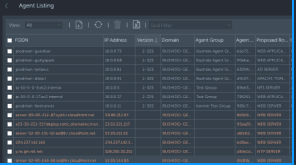
Unregistered Nodes are unregistered applications, and do not have any TrueFort agents installed. Also corresponds to the ‘Agent Listing’ section as the FQDN is shown in the same red/orange color.
Server Roles: also known as Roles - how should these be referred to?
- NTP Network
- - The Network Time Protocol is a networking protocol for clock synchronization between computer systems over packet-switched, variable-latency data networks.
- DNS Server
- - matches domain names with IP addresses.
- Web Server
- - displays website content through storing, processing and delivering webpages to users.
- AD Server
- - active directory server - stores info about objects on the network and makes this info easy for admins and users to find and use.
- MESSAGING Server
- - handles messages that are sent for use by other programs using a messaging API. Can also queue and prioritize messages needed and saves each of the client programs from having to perform these services.
- WEB APPLICATION Server
- - can also deliver web content, but its primary job is to enable interaction between end-user clients and server-side application code - the code representing what is often called business logic - to generate and deliver dynamic content, such as transaction results....etc....
- WEB LOAD BALANCER
- - load balancer sits between client devices and backend servers, receiving and then distributing incoming requests to any available server capable of fulfilling them.
- DB Server
- - store and manage databases that are stored on the server and to provide data access for authorized users.
- CASSANDRA Server
- - is a distributed database management system that is built to handle large amounts of data across multiple data centers and the cloud.
- NFS Server
- - a client/server application that lets a computer user view and optionally store and update files on a remote computer as though they were on the user's own computer.
- FILE Server
- - provide a central location to store all of your business files so that multiple users can easily work with the same documents, spreadsheets and other data. This centralized storage also allows a business to backup just one computer to be sure their data is safe.
- Amazon 2
- - application environment that offers long term support with access to the latest innovations in the Linux ecosystem.
- APACHE TOMCAT
- - is a Java Servlet container, or web container, that provides the extended functionality to interact with Java Servlets, while also implementing several technical specifications of the Java platform
- Redhat 7.6
- - supports and powers software and technologies for automation, cloud, containers, middleware, storage, application development, microservices, virtualization, management, and more.
- Linux
- - has long been the basis of commercial networking devices, but now it's a mainstay of enterprise infrastructure. Linux is a tried-and-true, open-source operating system released in 1991 for computers, but its use has expanded to underpin systems for cars, phones, web servers and, more recently, networking gear.
- Unregistered nodes
- -